


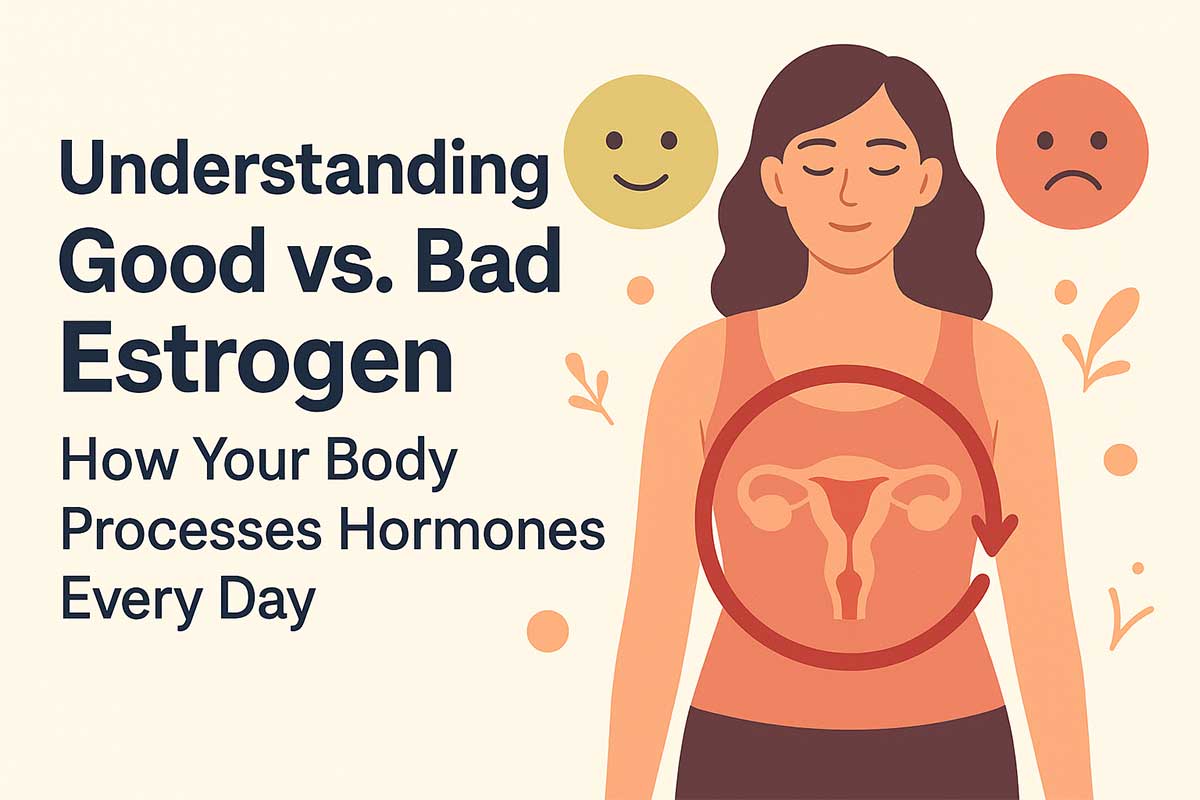
We often talk about “estrogen” like it’s a single hormone, but your body actually makes and clears several estrogen types every day. Some forms behave in ways that support healthy tissues; others can be more active or linger longer.
How your body processes estrogen affects energy, cycles, mood, and long-term tissue health. This post explains the basics of “good” versus “less desirable” estrogens and how daily habits influence which versions stick around.
The different forms of estrogen
Your body mainly produces three estrogens:
- Estradiol
- Estrone
- Estriol
Cells respond differently to each type. The liver and gut help convert and clear them, turning active forms into less active ones that the body can remove. How well those clearance systems work, like liver enzymes, methylation, and gut bacteria, shapes the balance between helpful and more reactive estrogens.
How your body clears estrogen every day
Estrogen clearance happens in two broad stages. First, liver enzymes modify estrogens so they’re easier to handle. Second, those modified forms go through “phase II” reactions.
Think of these as tagging steps that make hormones water-soluble so your body can excrete them. Healthy gut bacteria and regular bowel movements finish the job. If any step slows down, more active estrogen can recirculate.
What shifts “good” to “bad” estrogen in real life
Many everyday factors nudge this balance: poor digestion, low fiber intake, certain medications, excess alcohol, or exposure to environmental chemicals that mimic hormones. High stress and disrupted sleep also affect liver enzyme activity. Those lifestyle realities can make estrogen sit in the body longer or shift toward forms with stronger effects.
Practical steps to support healthy estrogen processing
You don’t need complex tests to start supporting your pathways. Try simple, sustainable habits: eat more fiber (vegetables, beans, whole grains), include cruciferous vegetables (broccoli, cauliflower) that support liver pathways, keep alcohol moderate, and prioritize sleep.
Light resistance exercise and steady movement help circulation and digestion, both of which aid clearance. Avoid long-term use of products with hormone-mimicking chemicals (some plastics, certain fragrances) when possible.
Estroclear (60 ct): what this formula aims to do
Estroclear (60 ct) is designed as a short-term, targeted formula to support normal estrogen processing. Ingredients commonly used in formulas like this focus on gentle liver support, phase-II conjugation pathways, and gut health support.
Taken as part of a broader plan like diet, movement, and sleep, such a supplement can help people who want an extra layer of nutritional support while addressing lifestyle habits.
When to talk with a clinician?
If you have sudden changes in bleeding, persistent symptoms, or a history of hormone-sensitive conditions, check with a clinician before starting any supplement. Labs can identify whether pathways are functioning as expected and whether a targeted plan is appropriate.
Conclusion
Most people get the biggest gains by combining sensible daily choices with targeted support if needed. Simple shifts such as more fiber, consistent sleep, and reduced alcohol help your body process estrogens the way it was meant to.
For focused support, Estroclear (60 ct) is one option to discuss with your provider.
iLIFE Anti-Aging Center offers Estroclear and professional guidance to help you choose the right approach for your needs.